
ANPR cameras in the UK: what organisations need to know

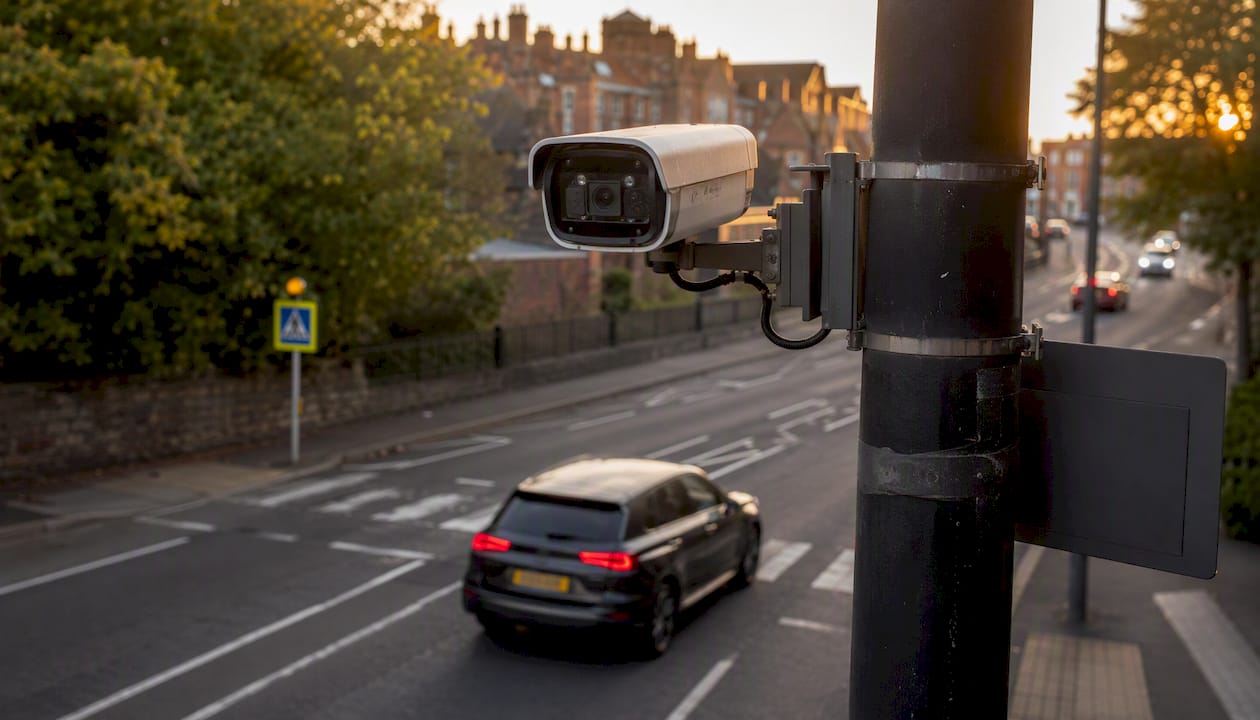
Automatic number plate recognition (ANPR) cameras read a vehicle’s registration mark (VRM) and stamp each read with a time, location, and camera identifier. That single record is the foundation of both national policing intelligence and private access control. The critical distinction UK readers must grasp immediately: police ANPR data sits inside the National ANPR Capability (NAC), governed by Home Office standards and strict law-enforcement access rules. Private systems — car parks, business sites, schools — are entirely separate and must comply with the Data Protection Act 2018 and UK GDPR independently.
Quick orientation:
Police/public sector: governed by NASPLE and the National ANPR Service; data stored nationally for up to 12 months.
Private operators: not connected to NAC by default; must complete a Data Protection Impact Assessment (DPIA), set a retention schedule, and display clear signage.
Individuals: can request their own ANPR data held nationally via the National ANPR Service Subject Rights process.
Table of Contents
What are ANPR cameras and what types are deployed in the UK?
An ANPR camera does one specific job: it captures an image of a passing vehicle, extracts the VRM using optical character recognition (OCR), and creates a timestamped read record. That record typically includes the VRM, the date and time, the camera’s unique identifier, and a location reference. Two images are usually stored alongside it: a plate patch (a close crop of the number plate) and an overview image showing the vehicle in context.
The UK deploys several distinct hardware types:
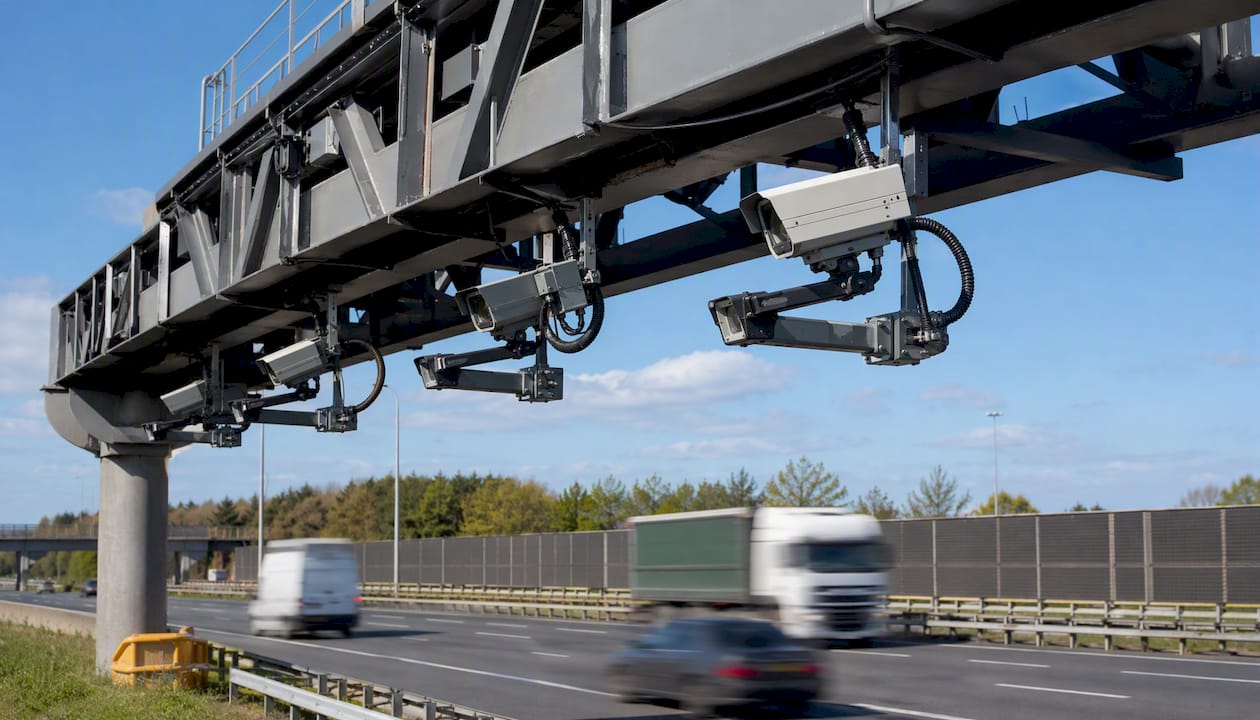
Fixed/static cameras are the backbone of the national network. Mounted permanently on gantries, poles, or bridges, they cover motorways, A-roads, and urban junctions. These carry the highest performance expectations under NASPLE.
Mobile cameras are vehicle-mounted units used by police for patrol work. Because the vehicle moves, capture rates are lower than static installations, and GPS accuracy requirements differ accordingly.
Multi-lane systems cover several lanes simultaneously, typically at major road junctions or toll points. They use multiple camera heads coordinated through a single back-office function.
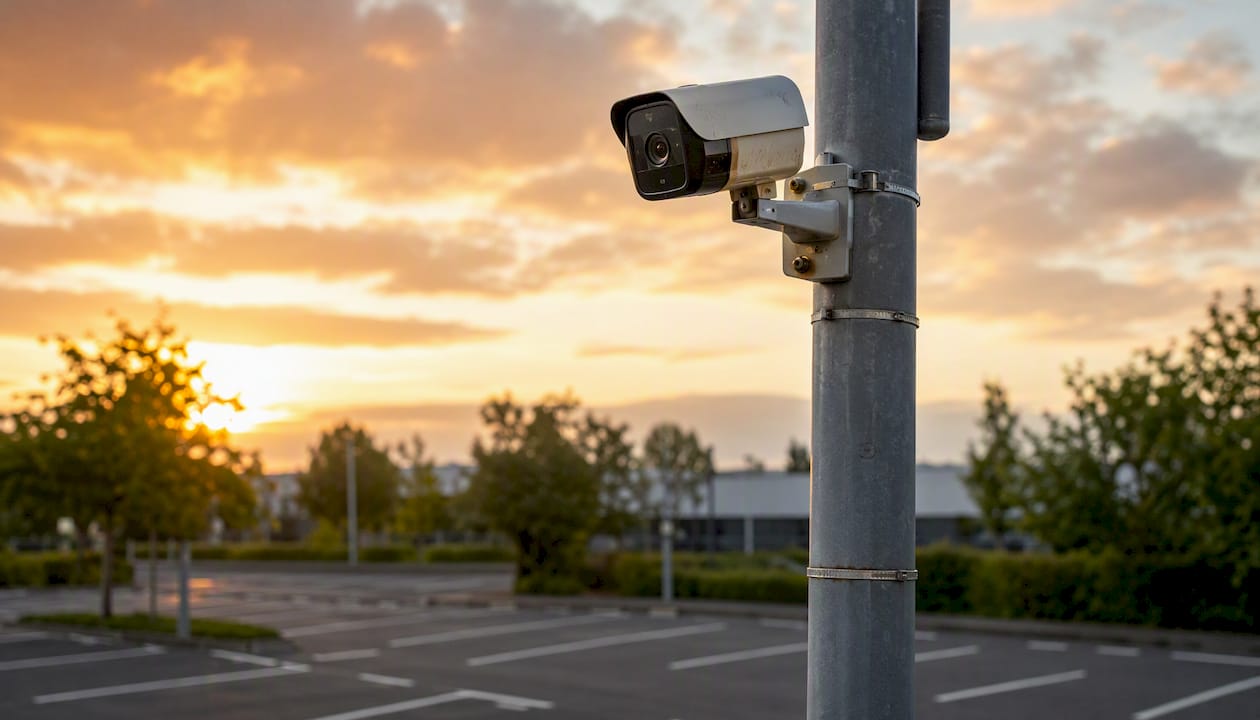
CCTV-integrated cameras combine standard surveillance with ANPR capability. Common in car parks and retail sites, these are usually commercial-grade rather than police-specification hardware. Performance is lower than dedicated ANPR units, but they serve access control and parking enforcement adequately.
Covert and temporary cameras are deployed by police for specific operations. They may be disguised or positioned temporarily, with location data managed carefully to protect operational security.
Pro Tip: If you are procuring ANPR for a commercial site and considering a CCTV-integrated unit, confirm the OCR engine’s read accuracy in your specific lighting conditions before signing a contract. Integrated units vary widely in performance, and a camera that reads 90% of plates in daylight may drop significantly under artificial lighting or in wet weather.
How do ANPR cameras work from capture to alert?
The process runs in four stages, each with specific technical requirements that determine whether a read is usable as evidence or intelligence.
Stage 1: Image capture. The camera uses an infrared illuminator to capture a sharp image regardless of ambient light. The shutter speed must be fast enough to freeze a vehicle travelling at motorway speeds. Two image files are produced: the plate patch and the overview. For systems feeding the NAC, the plate patch must be 120×60 pixels and no larger than 3KB, a constraint that preserves interoperability across the national network without overwhelming storage.
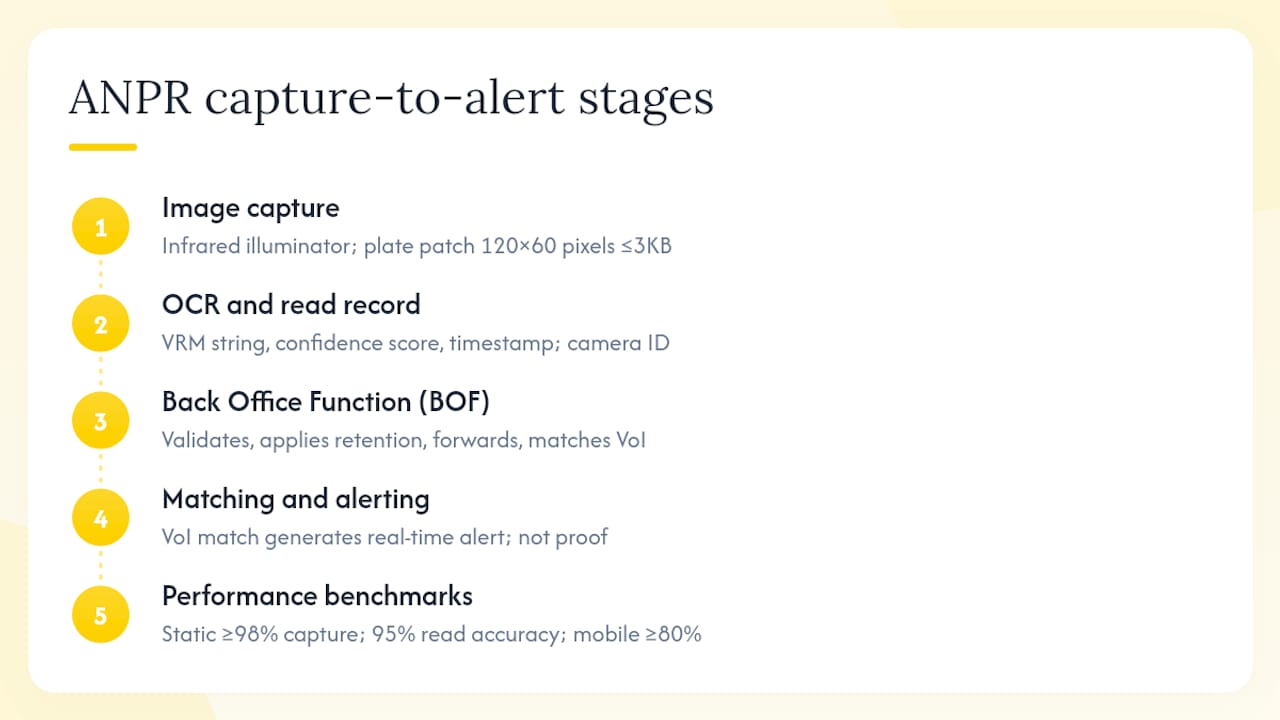
Stage 2: OCR and the read record. The camera’s on-board processor (or a connected server) applies OCR to the plate patch. A successful read produces a VRM string, a confidence score, and a timestamp. The read record also carries the camera’s unique identifier, which ties the read to a specific, verified location. Official GOV.UK guidance on number plate display sets the legal standards for plate fonts, spacing, and reflectivity — non-compliant plates directly reduce OCR success rates.
Stage 3: Back Office Function (BOF). The BOF is the software layer that receives reads from one or more cameras, validates them, applies local retention rules, and forwards qualifying reads to national systems. It also manages matching: comparing incoming VRMs against Vehicles of Interest (VoI) lists and triggering alerts to operators or officers when a match occurs.
Stage 4: Matching and alerting. A match against a VoI list generates a real-time alert. The College of Policing is clear that ANPR provides lines of enquiry and intelligence, not proof of guilt. Officers must consider ANPR data alongside CCTV footage, witness accounts, and other evidence before acting.
Performance benchmark: NASPLE requires static cameras to capture at least 98% of readable plates passing the camera and to read accurately at least 95% of those captured images. Mobile deployments operate to a lower capture threshold of 80% when the patrol vehicle is moving.
How big is the UK’s national ANPR network?
The UK’s national ANPR infrastructure is one of the largest of its kind in the world, built over decades from fragmented force-level systems into a unified national capability.
The National ANPR Capability (NAC)
The NAC is the umbrella term for the entire national system: the cameras, the communications links, the National ANPR Infrastructure (NAI), and the National ANPR Data Centre (NADC) where reads are stored centrally. The Home Office controls the standards and access rules; individual Law Enforcement Agencies (LEAs) operate cameras and access data within those rules. The National ANPR Service (NAS) is the operational service that manages the national store.
Scale and retention
The National ANPR Service DPIA records that reads submitted to national systems run into tens of millions daily. Retention works on two tiers:
Storage tier | Retention period | Who manages it |
Local system (BOF) | Up to 90 days | Individual LEA or operator |
National store (NADC) | Typically 12 months | National ANPR Service / Home Office |
Data held nationally is classified as Official – Sensitive. Access is restricted to approved LEAs for law-enforcement purposes only; it cannot be used for general administration or shared with non-law-enforcement bodies.
Camera naming and GPS requirements
Every camera feeding the NAC must carry a unique triplet identifier: a Force Unit Code (FUC), a camera lane ID, and a BOF identifier. If a camera is relocated, it receives a new identifier. This rule exists to preserve the integrity of location data — a read is only useful as evidence if the location it records is unambiguous. Technical specifications require fixed cameras to record GPS coordinates accurate to within 5 metres.
Scale context: The national network spans thousands of cameras across England, Wales, Scotland, and Northern Ireland, with the strategic road network and major urban junctions forming the densest coverage.
What are the legal and data protection rules for ANPR in the UK?
Who can access NAC data?
Only approved LEAs may access the national store, and only for law-enforcement purposes. The Home Office standards are explicit: cameras used solely for speed enforcement fall outside NASPLE’s scope and do not feed the NAC. A camera can, in certain circumstances, supply data to both the NAC and a separate organisation, but those data flows must be managed independently with separate governance.
How individuals can request their ANPR data
For data held in the national store, the National ANPR Service Subject Rights Notice sets out the categories of data held and the process for making a subject access request. You submit a request to the National ANPR Service; the response will confirm what data (if any) is held against your VRM and the associated read records.
For data held by a private operator, submit a subject access request directly to that organisation as the data controller. They must respond within one calendar month under UK GDPR.
Pro Tip: When making a subject access request to a private ANPR operator, include the date, time, and location of the read you are querying. This narrows the search and reduces the chance of a blanket “no data found” response that misses the specific record you need.
Enforcement and consequences of non-compliance
The ICO can issue fines, enforcement notices, and reprimands for breaches of UK GDPR. For serious breaches — retaining data beyond a stated period, failing to complete a DPIA, or sharing reads with unauthorised parties — fines can reach the higher of £17.5 million or 4% of global annual turnover. Beyond financial penalties, non-compliant ANPR evidence may be ruled inadmissible in proceedings, undermining the operational purpose of the system entirely.
Where are ANPR cameras sited and how do you recognise one?
How to recognise an ANPR camera
ANPR cameras tend to be narrower and more directional than standard CCTV domes. Look for:
A rectangular or cylindrical housing pointed at a specific lane or entry point rather than a wide-angle dome.
An infrared ring around the lens, visible as a faint red glow at night.
Positioning at a height and angle optimised for plate capture (typically 0.5–1.5 metres above road level for dedicated units, or higher on gantries).
Signage nearby stating “ANPR in operation” — a legal requirement for private operators and good practice for public-sector deployments.
Forces are not required to publish exact camera locations, but many publish general coverage maps. The College of Policing notes that strategic assessment must precede deployment, and LEAs must be able to justify each camera’s location against an operational need.
Practical checklist for organisations deploying ANPR
Commercial and public-sector organisations planning an ANPR deployment face a two-track challenge: getting the technology right and getting the governance right. Most projects that run into trouble do so at the governance stage, not the installation stage.
Before procurement
Define your purpose clearly. Access control, parking enforcement, and security investigation each carry different data-retention justifications.
Decide whether you need live-link capability to police systems. Most private deployments do not and should not connect to the NAC. If a live link is required, you must meet NASPLE standards and receive formal approval.
Specify camera performance requirements in your tender. For sites where evidential quality matters, align with NASPLE capture and read-rate benchmarks even if you are not connecting to the NAC.
DPIA and privacy engagement
Complete a DPIA before any equipment is ordered. If the deployment is high-risk (large-scale, sensitive location, or involving vulnerable people), consider a public consultation or stakeholder engagement exercise beyond the DPIA itself.
Document your lawful basis for processing. Legitimate interests is the most common basis for private ANPR, but it requires a balancing test against the rights of individuals whose data you will process.
Appoint a named data controller and, if required, a Data Protection Officer.
Technical and operational setup
Assign unique identifiers to every camera. Even for private systems not feeding the NAC, unique naming makes audit trails reliable.
Set GPS coordinates for fixed cameras and record them in your system documentation.
Configure your BOF to delete reads automatically at the end of your stated retention period.
Establish an audit log of every access to ANPR data, recording who accessed it, when, and for what purpose.
Pro Tip: Build your retention period around your operational need, not convenience. A car park operator enforcing 2-hour limits needs reads for perhaps 48 hours. Retaining them for 90 days without justification is a compliance liability, not a safety net.
Ongoing maintenance and calibration
Schedule regular calibration checks, particularly after any physical disturbance to the camera mount.
Run periodic validation reads using known test plates to confirm OCR accuracy has not degraded.
Review VoI list currency if your system uses matching; stale lists generate false alerts and erode operator trust in the system.
Document all maintenance activity. If a read is ever challenged, a maintenance log demonstrating the camera was calibrated and performing correctly is your first line of defence.
What to do when ANPR gets it wrong
Why misreads happen
OCR errors occur when the plate image is degraded. Common causes include dirty or damaged plates, non-standard fonts, partial obscuring by a tow bar or cycle rack, extreme sun glare, and motion blur at high speeds. GOV.UK guidance on displaying number plates sets the legal standards for plate condition and font — a plate that does not meet those standards is more likely to generate a misread and may itself be an offence.
Operational mitigations for organisations
Retain overview images alongside plate patches for the full retention period. A plate patch alone cannot confirm vehicle identity; the overview image showing make, model, and colour is what resolves disputes.
Build a manual validation step into your alert workflow. Automated matches should trigger a human review before any enforcement action is taken.
Maintain a documented dispute escalation path so staff know exactly what to do when a driver challenges a read.
Key takeaways
ANPR cameras in the UK operate under two distinct frameworks: the nationally governed NAC for policing, and separately regulated private systems that must comply with UK GDPR and the Data Protection Act 2018.
Point | Details |
Police vs private distinction | NAC data is law-enforcement only; private ANPR systems must be governed independently under UK GDPR. |
Retention tiers | National store retains reads for up to 12 months; local/private systems may retain data for up to 90 days, but only as long as operationally justified. |
Performance standards | Static cameras must achieve 98% capture and 95% read accuracy under NASPLE; mobile deployments operate to a lower capture threshold of 80% when the patrol vehicle is moving. |
DPIA before deployment | Any organisation deploying ANPR must complete a DPIA and document a lawful basis before a single camera goes live. |
Threesixtyfireandsecurity | Offers professional ANPR-capable CCTV design and installation with compliance documentation and ongoing maintenance contracts. |
The part most organisations get wrong about ANPR
There is a persistent assumption that ANPR is primarily a technology problem. Buy the right camera, point it at the gate, and the job is done. The evidence from real deployments tells a different story.
The governance layer is where projects fail. Retention schedules that were never set, audit logs that were never enabled, DPIAs completed after installation rather than before, staff who can pull read data with no record of why they accessed it. These are not edge cases. They are the norm in commercial deployments that were procured on price rather than on compliance readiness.
There is also a subtler issue with how organisations think about ANPR data. Because the camera is passive and the data collection feels automatic, it is easy to treat ANPR reads as low-sensitivity records. They are not. A sequence of reads across multiple cameras tells you where a person was, when, and how often. That is a detailed movement profile, and UK GDPR treats it accordingly.
The College of Policing’s framing is worth borrowing even for private operators: ANPR is a strategic tool, not an indiscriminate one. Deploy it with a defined purpose, a proportionate retention period, and a clear escalation path for errors. That discipline is what separates a defensible deployment from a liability.
Threesixtyfireandsecurity can handle your ANPR project end to end
Specifying, installing, and maintaining a compliant ANPR system takes more than sourcing a camera. The compliance documentation, the BOF configuration, the retention schedule, the signage, the ongoing calibration — each of these is a separate task that can go wrong independently.
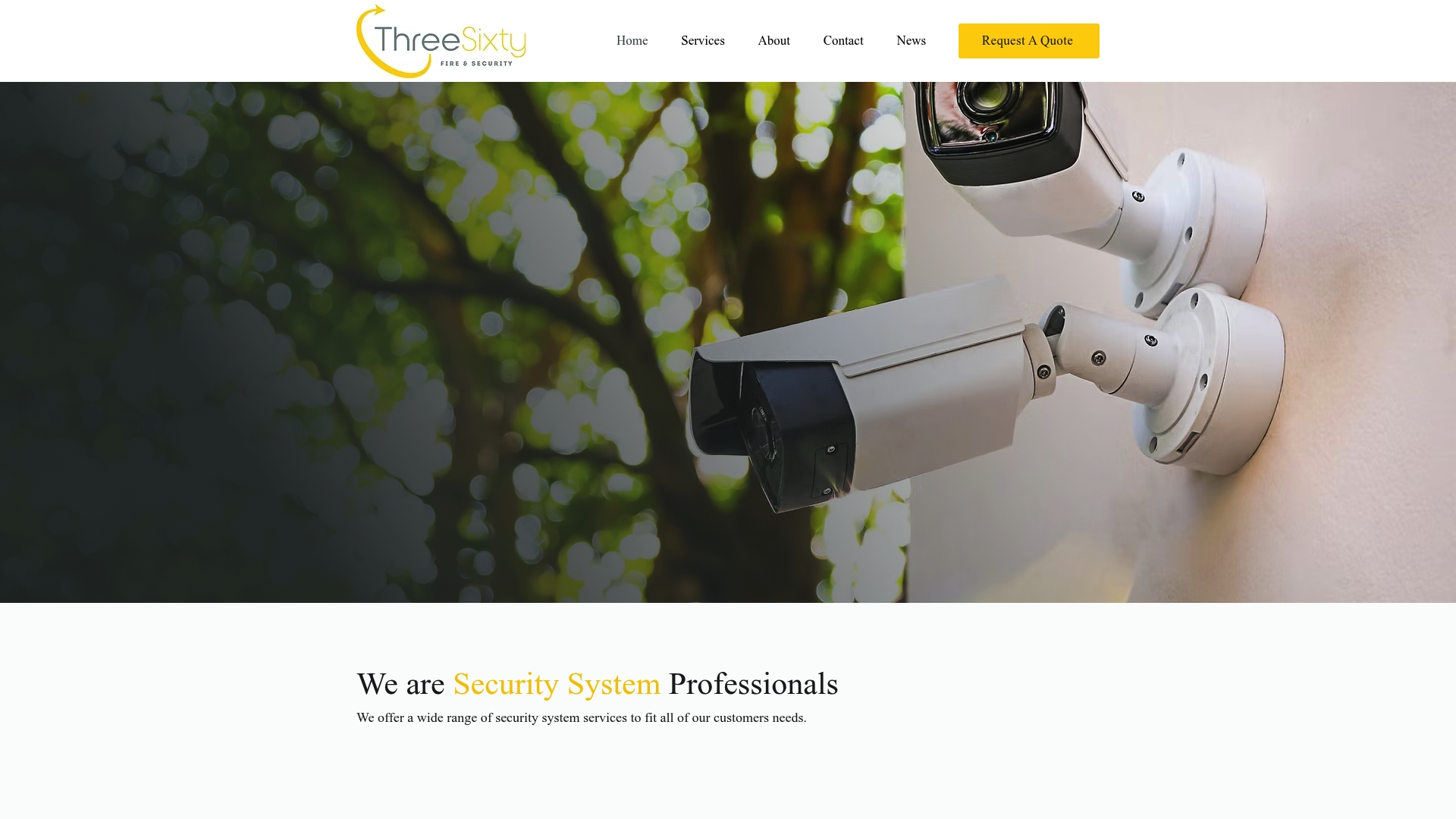
Threesixtyfireandsecurity designs and installs ANPR-capable CCTV systems for commercial, educational, hospitality, and retail sites across England, with every project built around UK regulatory requirements from the outset. That means a DPIA-ready system specification, correct camera placement for your site geometry, and a maintenance contract that keeps read accuracy and audit trails in order after handover. For sites where ANPR feeds into vehicle access control, the team integrates both systems under a single service agreement.
Get in touch via the services page to discuss your site requirements and receive a compliance-ready project proposal.
Useful sources
The sources below are the primary references for anyone working with ANPR in the UK, whether from a policing, compliance, or operational standpoint.
For technical and operational standards:
National ANPR Standards for Policing and Law Enforcement (NASPLE)
National ANPR standards for policing and law enforcement (accessible version) — GOV.UK
National ANPR Service technical specifications (accessible version) — GOV
National ANPR Service: data protection impact assessment — GOV.UK
Displaying number plates — GOV.UK
For enforcement and investigative use:
For data rights and privacy:
For plate standards affecting read reliability:
This article provides general information about ANPR systems and UK regulatory frameworks. It is not legal advice. Confirm current rules with the ICO, the relevant primary legislation, or a qualified legal professional before making deployment decisions.
Recommended
Comments